Get to know the ophthalmologist – the medical and surgical expert on your eye care team.
The Ophthalmologist – Your Medical Doctor and Eye Surgeon
A physician with advanced medical and surgical training in the management of eye diseases
Doctor of Medicine (MD)
9+ years | Medical school + Ophthalmology residency program
An ophthalmologist is a medical doctor who specializes in the management of eye diseases.
As the only “O” of the eye care team with a medical degree, the ophthalmologist is often referred to as an “Eye MD”.
Ophthalmologists complete extensive medical and surgical training. After earning a 4-year undergraduate degree, they go on to complete:
4-5 years of medical school to become a physician
5 years of ophthalmology residency for specialized medical and surgical training
1-3 additional years of subspecialty training in a specific area of eye disease (optional)
This advanced training gives ophthalmologists the expertise to diagnose, treat, and prevent progression of serious eye conditions like AMD, cataracts, diabetic retinopathy, and glaucoma.
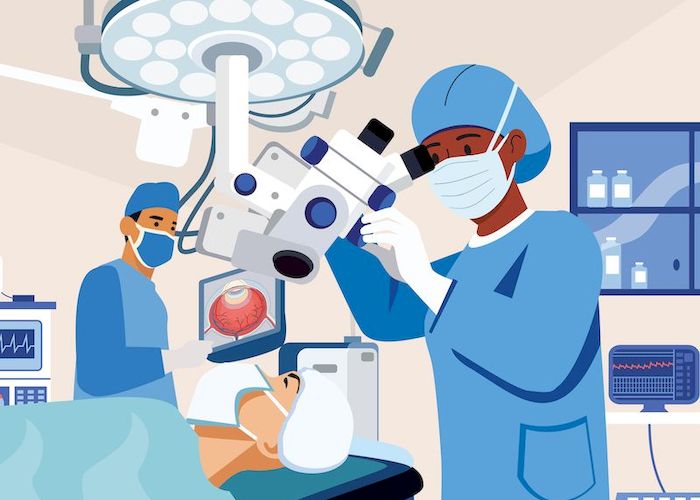
Ophthalmologists are highly trained eye surgeons who perform the full range of procedures designed to protect and restore your sight, from cataract surgery to corneal transplantation and retinal repairs. Backed by thousands of hours of surgical training, they bring the skill, precision, and experience needed to care for your eyes with confidence and compassion.
In addition to delivering exceptional patient care, ophthalmologists are also committed to advancing the field through innovation. Look back at the history of ophthalmology research in our innovation timeline. Ongoing research continues to drive breakthroughs in diagnostics, medications, and surgical techniques – all with the goal of improving outcomes for patients.
Meet the Rest of the “Os”: Your Complete Eye Care Team
Ophthalmologists work closely with other members of the eye care team, who support your vision every step of the way.
The Optometrist – Your Primary Vision Care Provider
A licensed healthcare professional trained in eye and vision care
Doctor of Optometry (OD)
4 years | School of Optometry
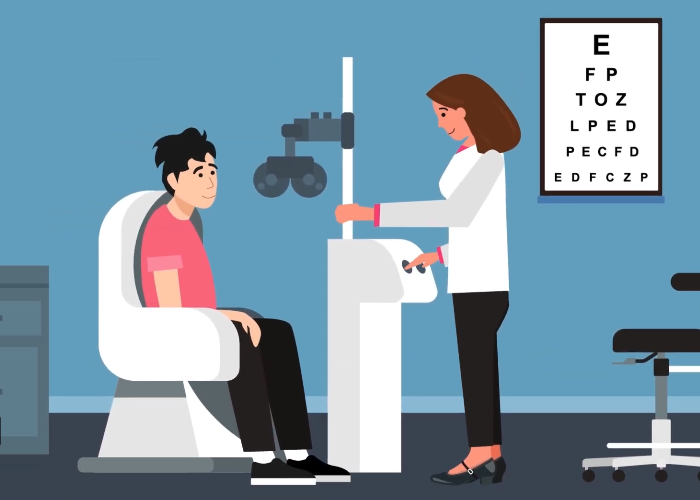
An optometrist is a primary eye care professional who you see for routine eye and vision care. They can:
Perform comprehensive eye exams
Prescribe glasses, contact lenses and certain medications
Monitor your overall eye health
Following an undergraduate degree, optometrists complete 4-5 years of training at a School of Optometry to earn their professional designation as a Doctor of Optometry.
Optometrists are often the first eye care professional you’ll encounter if you’re experiencing a problem with your eyes or your vision. Regular visits are important for preventing and detecting early stages of eye disease. While optometrists can diagnose and treat some common eye conditions, they will refer you to an ophthalmologist when specialized medical or surgical care is needed.
The Orthoptist – Your Eye Movement and Visual System Expert
An allied eye health professional specialized in the visual system
Orthoptist Certified in Canada (OC(C))
2 years | Orthoptic program
Orthoptists are allied eye care professionals who are trained in eye movement and coordination.
They assess and treat vision issues related to:
Eye movement
Eye alignment
Binocular vision (how the eyes work together)
Working closely with ophthalmologists, orthoptists develop and carry out non-surgical treatment plans for conditions like:
Diplopia (double vision)
Strabismus (eye misalignment)
Amblyopia (often called “lazy eye”, where one eye has weaker vision than the other)
Through this collaborative treatment approach, orthoptists help your eyes work together more comfortably and effectively.
A licensed professional trained to fit and dispense vision aids like glasses and contacts
Licensed Optician or Registered Optician
1-3 years | Accredited Opticianry program
An optician is a licensed health care professional who helps you achieve your best possible vision – whether you’re nearsighted, farsighted, or have low vision due to more complex eye conditions. Opticians are specially trained to design, fit, and dispense vision aids such as:
Eyeglasses
Contact lenses
Low vision aids
Prosthetic ocular devices
Before they can practice as a Licensed Optician in Canada, opticians must:
Complete an accredited Opticianry program at an educational institution (1-3 years)
Pass a national exam
Opticians often own or work in a store that sells eyewear. A visit to an optician might be in order if you have a prescription from an optometrist or ophthalmologist and are looking for glasses or contacts to correct or enhance your vision.
Those are the “Os” of eye care - each with their own expertise but one
shared goal: keeping your vision healthy for life.