Category: Expert Opinions

November 9, 2023 by Scott C 0 Comments

Glaucoma

Dr. Hady Saheb who is a glaucoma surgeon whose ophthalmology practice is focused on medical and surgical glaucoma care.

Dr. Hady Saheb
McGill University Health Centre, Montreal, QC

Dr. Hady Saheb is a glaucoma surgeon whose ophthalmology practice is focused on medical and surgical glaucoma care, as well as cataract and complex anterior segment surgery. He’s the President of the Canadian Glaucoma Society and the Director of the Glaucoma Fellowship at McGill University. For Dr. Saheb, the most rewarding part about treating glaucoma is helping patients understand their disease and engaging them in their treatment to help preserve their vision.

What exactly is glaucoma?

Glaucoma refers to a group of eye diseases that affect the optic nerve, which connects your eye to your brain. Glaucoma is often related to the pressure inside the eye, known as intraocular pressure. When the eye fluid doesn’t drain properly, pressure builds up in the eye. This increased pressure can damage the optic nerve fibers, leading to a loss of peripheral vision and sometimes even complete vision loss.

I’m in my 40s and have never really given glaucoma much thought. What should I know?

I think it’s really important for everyone to know that glaucoma can lead to blindness if not treated early. In fact, it’s one of the most common causes of blindness both in Canada and worldwide. It’s equally important to remember that vision loss from glaucoma is preventable with early diagnosis and treatment. The best thing that you can do to protect yourself from glaucoma-related vision loss is to be screened regularly for glaucoma. Every adult should have a comprehensive eye exam with an eyecare provider every 1-2 years.

I’d urge Canadians to be aware of the risk factors for developing glaucoma. People over 50 years of age, who have a family history of glaucoma, or from certain ethnic groups (e.g., those of African descent) are at higher risk of developing glaucoma. Those individuals should be screened earlier and more often, at a minimum of once a year.
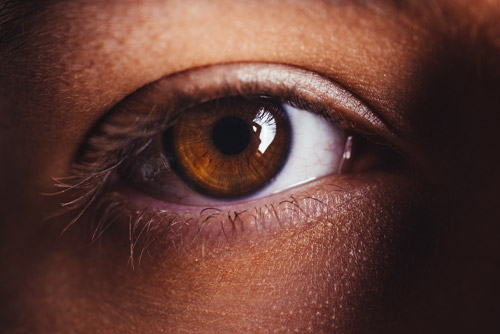
A close up of an eye, addressing the possibility of vision loss and the importance of visiting an eye doctor or optometrist.

I’ve just been diagnosed with glaucoma. Does that mean I’m going to go blind?

Recognizing how highly most people value their sense of sight, the thought of going blind is scary, so your question is common and an important one to ask. Glaucoma is a serious eye disease and remains one of the most common causes of blindness. What’s helpful to keep in mind is that in looking at studies of glaucoma around the world, most patients who go blind either started treatment when their glaucoma was already at a severe stage, or they struggle with adhering to treatment and follow-up. In many cases, if patients are engaged in their treatment and follow-up, the chances are very good that we’ll be able to maintain their vision throughout their lifetime.

I have glaucoma but I’ve never seen an ophthalmologist. What role does an ophthalmologist play and when should I be referred to one?
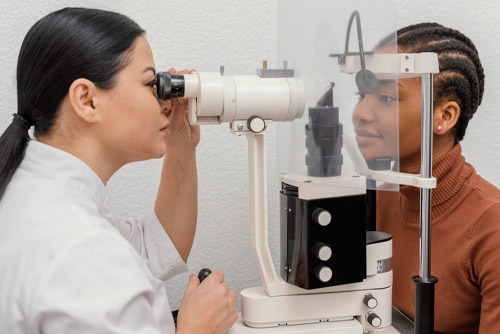
A woman is having her eyes examined by an optometrist, ensuring proper eye care.

Glaucoma care is complex and may involve an optometrist, ophthalmologist, or sometimes both working together. As medical doctors with extensive training, ophthalmologists have a unique and specialized expertise in managing patients with glaucoma. We also have the training required to perform laser and surgical procedures as well as manage any potential complications safely and quickly. In general, if they are not already seeing an ophthalmologist, patients with glaucoma should be referred for evaluation or treatment in the following cases:

  1. Worsening glaucoma despite treatment
  2. Difficulty lowering eye pressure despite treatment
  3. Difficulty tolerating current treatment
  4. High risk for glaucoma deterioration (e.g., younger age, strong family history of glaucoma-related vision loss, other eye conditions, etc.)

I’ve been on prescription eye drops for glaucoma for over a year. I know I need to use them regularly, but I really don’t like them. Is there anything else that can be done?

The short answer is yes – something else can almost always be done so it’s really important to share this feedback with your eye care provider. Prescription drops can be extremely effective for managing glaucoma, but some have side effects, such as increased dryness or irritation of the eyes. We know that patients who are bothered by their drops are less likely to take them regularly, so we want to work with you to help you find a treatment option you’re comfortable with. That could mean switching to a different kind of eye drop or considering other treatment options like laser or surgery. The key is to keep those lines of communication open with your eye care provider so they can find an option you’re likely to stick with.

Looking ahead to the next 5-10 years, what new advancements are on the horizon that will improve glaucoma care in Canada?

Ophthalmology is a medical discipline that’s constantly evolving and within glaucoma care specifically, there is a lot to look forward to in the next few years. The surgical space in glaucoma is continuing to evolve and there are new procedures expected to become available to patients that will improve surgical outcomes and safety. We’re also seeing laser treatment playing an increasing role as patients are looking for alternatives to eye drops to lower eye pressure. There’s also some exciting innovation still in the research phase looking at reversing glaucoma, rather than the current approach of preventing or stabilizing damage from the disease. Lastly, the COVID-19 pandemic has really accelerated the uptake of virtual glaucoma care and moving forward we’re likely to see more telehealth options available to make glaucoma care more accessible and convenient to patients.

August 2, 2023 by Scott C 0 Comments

Children’s Eye Health

Ophthalmologist Doctor Vivian Hill posing wearing a blue shirt

Dr. Vivian Hill
Assistant Professor, University of Calgary, Alberta
Ophthalmologist at Ashenhurst Eye, Calgary

Dr. Vivian Hill is a pediatric ophthalmologist with particular interest in strabismus management in both children and adults. Her clinical practice in Calgary comprises patients of all ages. Dr. Hill is active in training residents and medical students, and she has been a longstanding examiner for the Royal College of Physicians and Surgeons of Canada. 

For Dr. Hill, the most rewarding aspect of being a pediatric ophthalmologist is the opportunity to make an impact on a patient’s vision not only in childhood but in a way that gives them the best possible chance of lifelong healthy vision.

I’m a first-time mom to a 10-day-old baby. Is it true that newborns can’t see very well?

Babies do have vision at birth, but their visual system is immature and continues to develop over the first few years of life. A newborn baby can see motion but can’t really focus on an object in front of them because they don’t yet have central or foveal vision. At around 3 months of age, babies develop the ability to focus on things. Improving visual coordination at this age allows the eyes to work together to track moving objects. Over the next few years, children experience increasing maturity of their central vision, with most acquiring 20/20 vision by age 4-5 years. 

A baby's feet are peacefully rested on a soft blanket.

My two-year-old seems to be able to see clearly. What is her eye doctor looking for during an eye exam?

During an eye exam or vision screening, we check for common childhood vision problems like refractive errors, which can cause blurry vision at either near or far distances. Another important thing we look for in young children is eye alignment. In the first few years of life, children are developing vision in both their left and right eye. They are also developing binocular vision, which is a merging of vision between the eyes. To work together, each eye needs to have good vision and be functioning well, but the eyes also need to be aligned and pointing at the same object. And that’s the big one that can get missed in early childhood. If the eyes aren’t aligned, even by just a few degrees, a child can learn to ignore vision in one eye, which impacts vision not only in that eye, but also reduces the potential for optimal binocular vision. If your child’s eye doctor thinks they may have strabismus (or misalignment of the eyes), they will refer your child to an ophthalmologist for further evaluation.

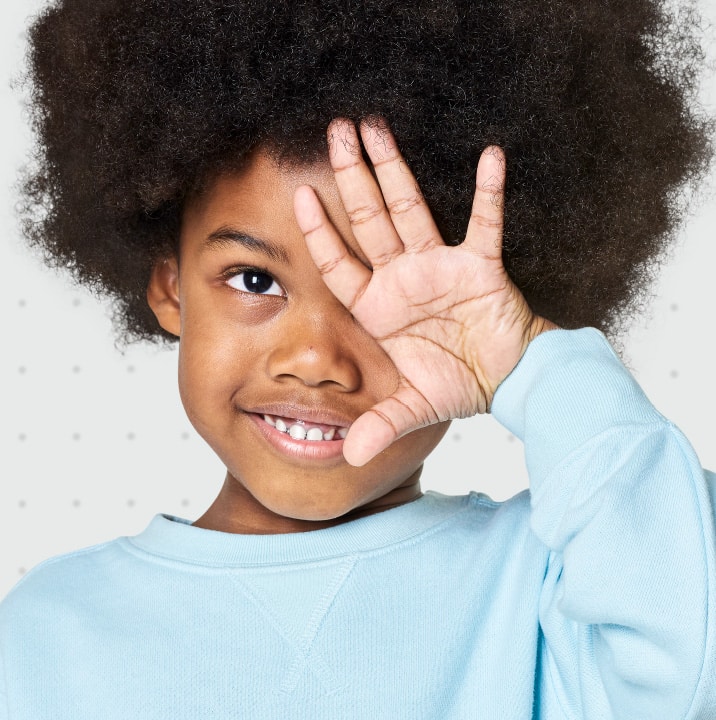
A young girl with afro hair making a sign with her hands while receiving eye care.

My 4-year-old has been referred to an ophthalmologist for possible amblyopia. What exactly is it, and why is it so important to treat it right away?

Amblyopia (commonly known as “lazy eye”) is one of the most common causes of vision loss in children. It refers to reduced vision in one eye (or rarely, both) caused by abnormal visual development early in life. 

While the visual system is developing (from birth to about 8 years of age), both eyes need to receive normal, appropriate visual stimulation. Amblyopia can occur if problems like uncorrected refractive errors, strabismus, drooping eyelids, or cataracts prevent this stimulation from occurring. Over time, the brain favours the eye with stronger vision and ignores images from the weaker eye. So amblyopia is a brain-based form of vision loss, resulting in a weakness in the pathways that connect the eyes to the brain’s vision centres. 

Treatment of amblyopia is somewhat a race against the clock because by about 8-10 years of age, the vision pathways mature and become more resistant to change. Amblyopia can be treated by forcing the amblyopic eye to work harder than the stronger eye. This is often done by wearing a patch over the stronger eye, or using atropine eye drops to blur vision in the stronger eye. Generally, the earlier this treatment starts, the more successful it is, and long-term problems with your child’s vision can be prevented.

How often should children be getting an eye exam?

Regular vision screenings can help protect your child’s vision by detecting any problems early on. While screening programs currently vary among provinces, the following are general recommendations for vision screening in children:

A baby laying on a blanket in front of a window, capturing the innocence and serenity of early childhood.

Babies

A little girl is smiling for the camera while at an appointment with her optometrist.

Children

What are the signs that my child may be having a problem with their vision?

Children, especially younger ones, might not always be able to tell you there is a problem with their vision. It’s helpful to watch for signs of vision problems so that they can be addressed early and appropriately, while vision is still developing. If you notice your child doing any of the following, it’s worth discussing with your eye care provider:

Remember, sometimes eye conditions can be asymptomatic, or the signs may be too subtle for you to notice, so it’s important that kids get screened regularly for eye issues. 

Is too much screen time really bad for my kids’ eyes?


You’re not alone in wondering this, and there are many reasons why parents might want to be mindful of the amount of time their children spend in front of a screen. From an eye health perspective, the development of myopia, or nearsightedness, in children is a growing issue worldwide. Myopia is the need for glasses to see at a distance. There is evidence that the more time children spend reading up close (whether that is on smart phones, tablets, books, or doing homework) and the less time they spend outside, the higher the risk of myopia.

The root cause of myopia is the eye growing too quickly during childhood and becoming abnormally long. As the eye gets too long, the tissues inside the eye stretch and become thin, making them more vulnerable to damage during adulthood (retinal detachment, growth of abnormal blood vessels, even glaucoma). While genetics play a role in the development of myopia, environmental factors like increased near-screen time and reduced time outdoors also seem to contribute.

Parents who have myopia (and whose children are therefore at a higher risk) need to make a real effort to counteract some of these environmental factors to help prevent myopia, or at least delay its onset:

There are new treatment options, like eye drops and certain specialized optical corrections, that can intervene during the rapid growth phase to help slow the progression of myopia. 

How can I help set my child up for lifelong healthy vision?

Good vision is very important to a child’s physical development, success in school, and overall well-being. It’s great that you’re thinking about protecting your child’s eye health. There are several things you can do to support healthy vision now and for the future:

1) Take eye safety seriously

2) Practice good screen hygiene

1) Spend time outdoors

4) Ensure kids wear glasses if prescribed

5) Make sure kids are getting vision screenings in early childhood

My child’s ophthalmologist has suggested for him to see an orthoptist. What’s their role on the eye care team?

You’re probably most familiar with the “3 O’s” of the eye care team: the optician, the optometrist, and the ophthalmologist. An orthoptist is another important member of the team who specializes in ocular mobility and visual development. Orthoptists often work in close collaboration with pediatric ophthalmologists to assess, diagnose, and monitor problems related to eye movement and alignment, such as strabismus, amblyopia, and double vision. They also provide support in formulating and carrying out non-surgical treatment plans for these conditions. Orthoptists can also work with comprehensive ophthalmologists to assist them in delivering optimal care for their pediatric patients. If your child has been referred to an orthoptist, rest assured that they are in good hands.

A woman in glasses is sitting in front of an eye machine at an eye doctor's office, ensuring her eye health and screening for potential eye diseases.